
All data are for 2019–2024 except for ESnet users, which is calculated from 2023–2024.
Learn more about ESnet and the Materials Project.
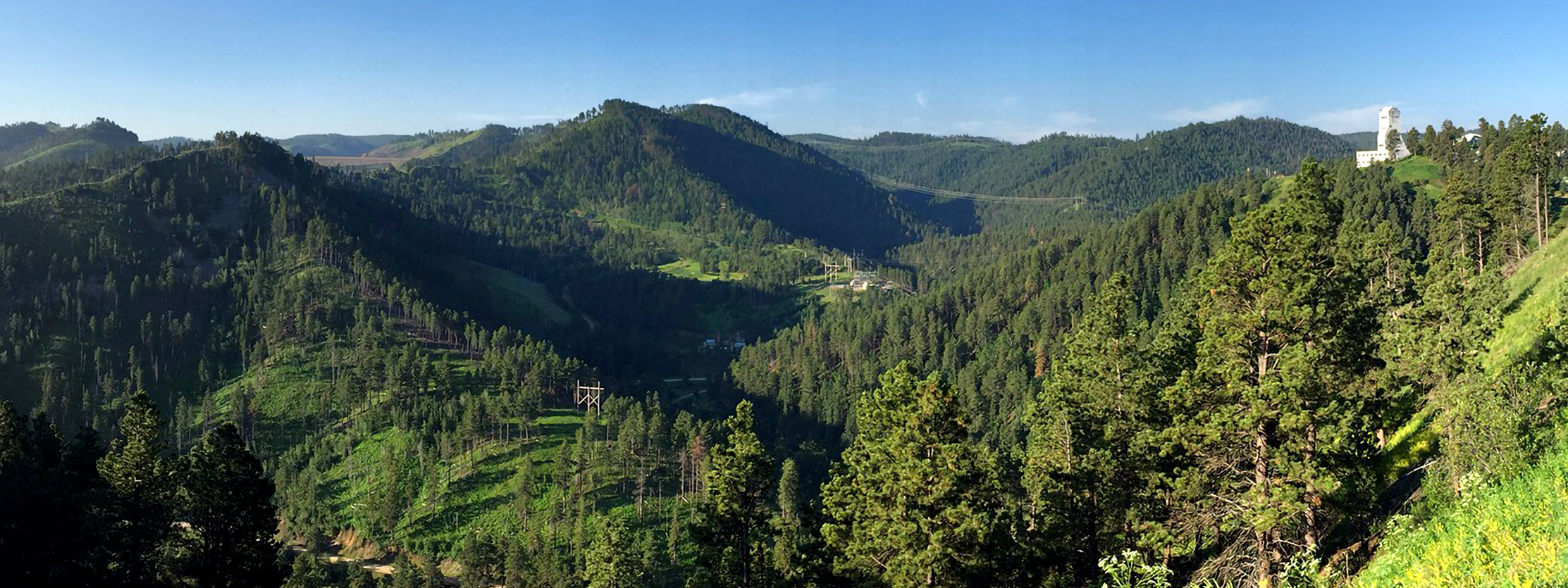
Headquarters of the Search for Dark Matter
A collaboration of scientists led by Berkeley Lab is studying weakly interacting massive particles, or WIMPs, for clues to the nature of dark matter. To do so, they’re using the world’s most sensitive dark matter detector, LUX-ZEPLIN (LZ), which sits nearly one mile below the Earth’s surface in the Sanford Underground Research Laboratory (SURF) near Lead, South Dakota. SURF is a vital scientific facility and economic driver in the region, creating 1,200 jobs and driving an expected net economic impact of nearly $2 billion this decade.
We collaborate with local organizations in every state across the nation to accelerate discovery, boost economies, and address national challenges.