
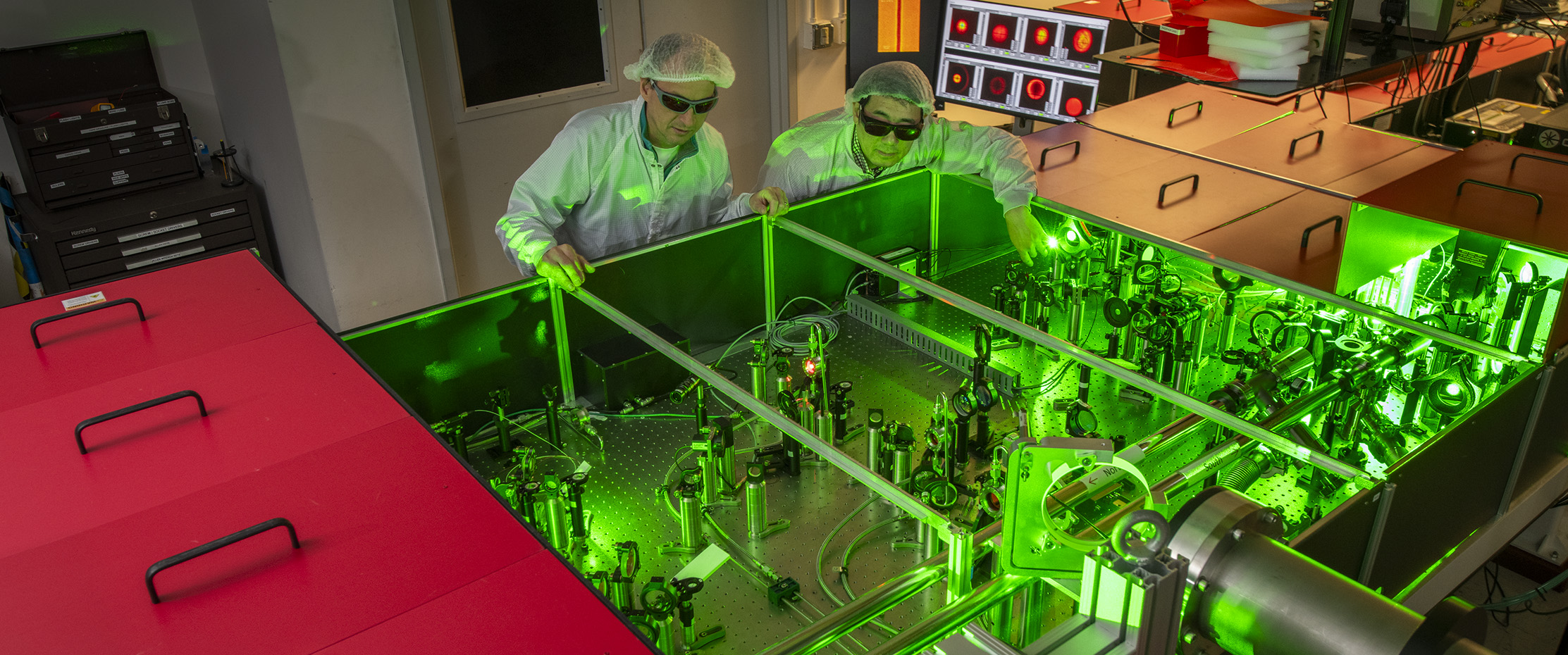
Berkeley Lab is building the breakthrough technologies and foundational knowledge needed to make practical fusion energy achievable. Our researchers advance magnets, materials, accelerators, simulations, and artificial intelligence for fusion.

Superconducting Magnets
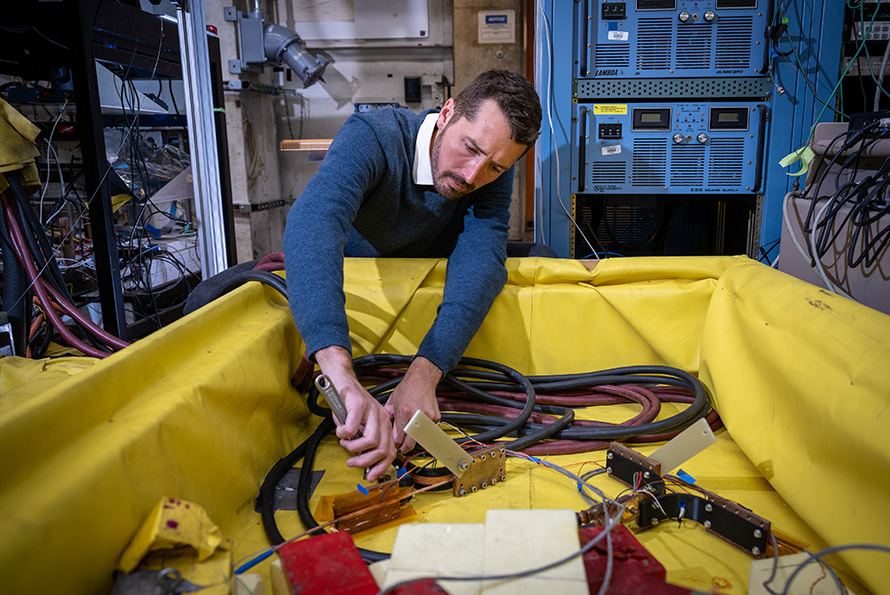
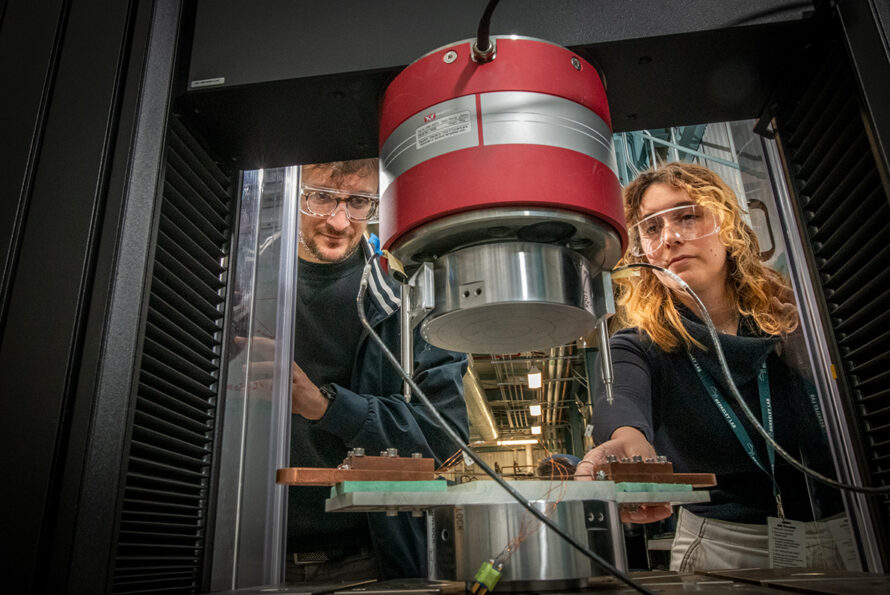
Advancing high-field superconducting magnet technologies critical to making magnetic confinement fusion smaller, more efficient, and more viable by improving magnet performance and reliability.
Modeling at Exascale
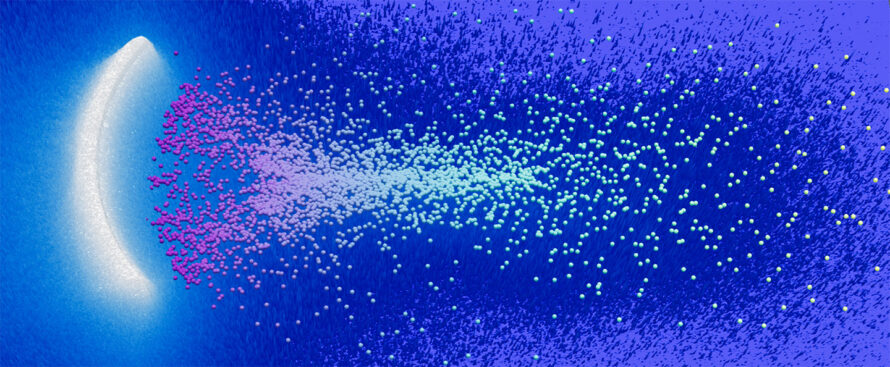
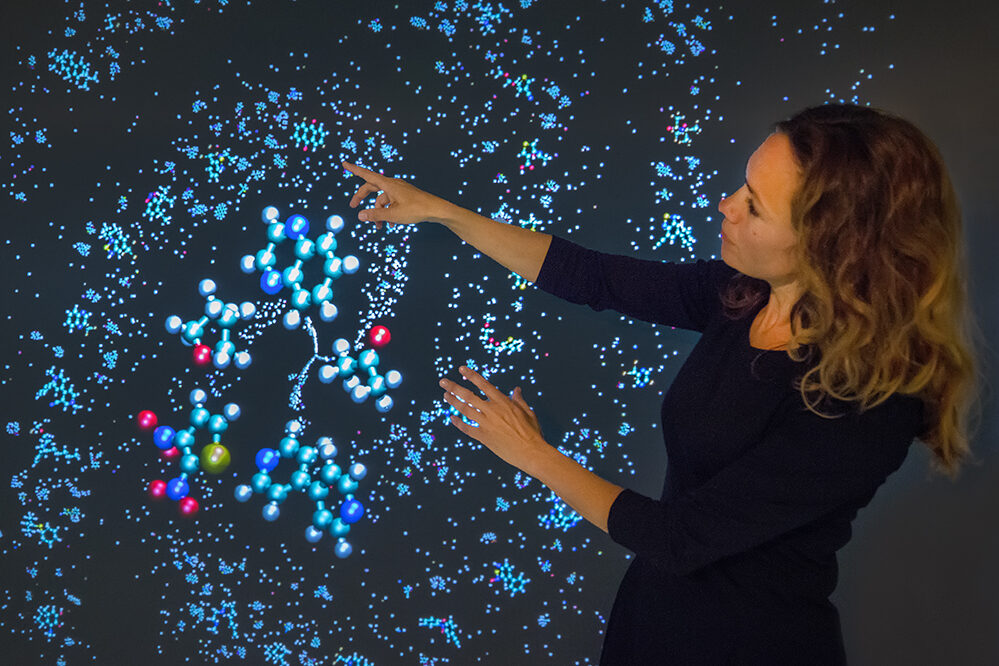
Developing and running exascale-scale simulations on the world’s largest supercomputers to enable high-fidelity modeling of complex plasma, beam, and fusion-relevant physics.
Fusion, AI and the Genesis Mission

AI and integrated data platforms accelerate fusion discovery by uniting simulations, experiments, and machine learning to rapidly design, optimize, and understand fusion systems.
Ultra-fast Photon and Particle Sources
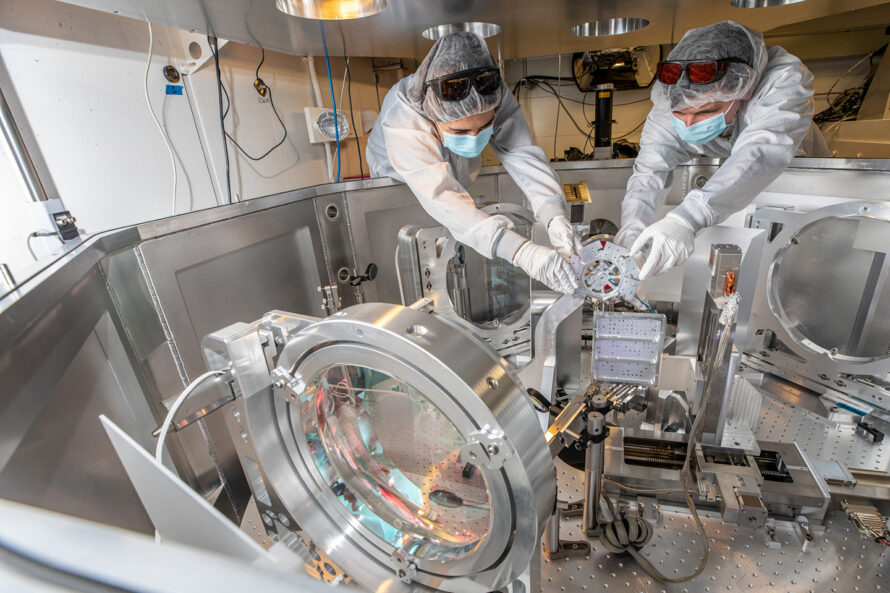
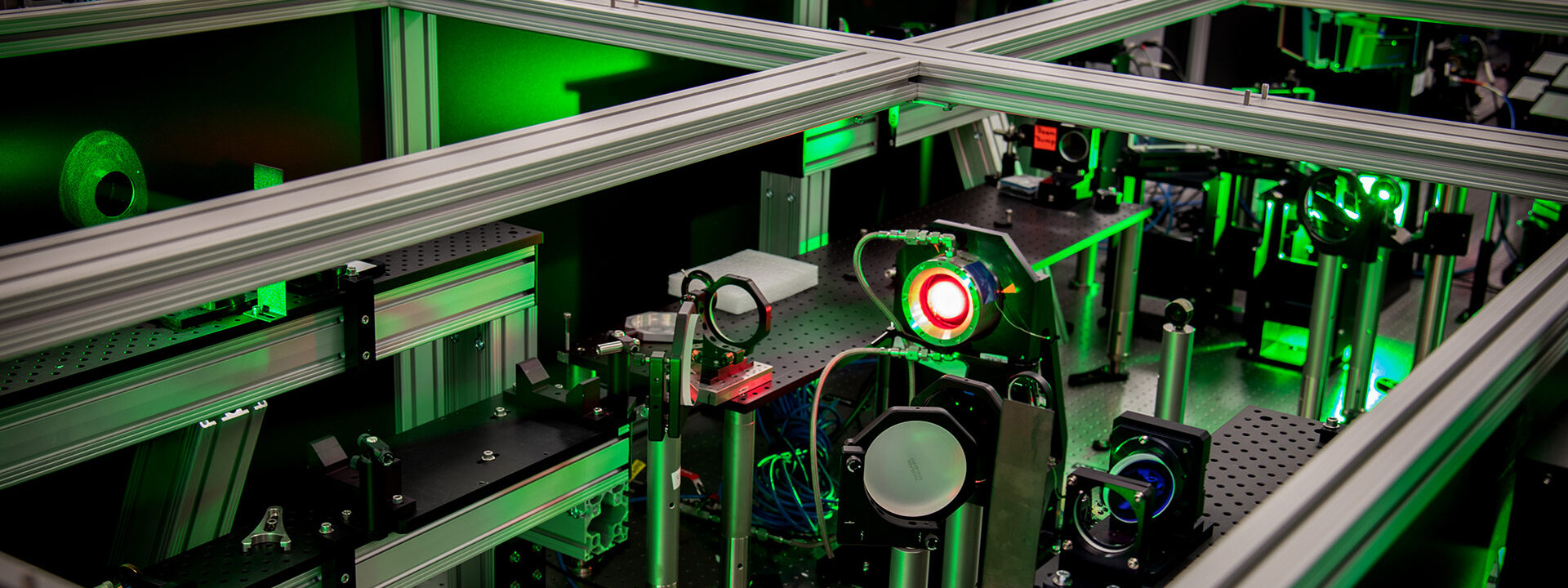
Ultra-intense lasers generate extreme electric fields in plasma, accelerating particles to high energies in very short distances, enabling compact accelerators and advancing fusion-relevant science.
Advanced Sources and Testing for Fusion
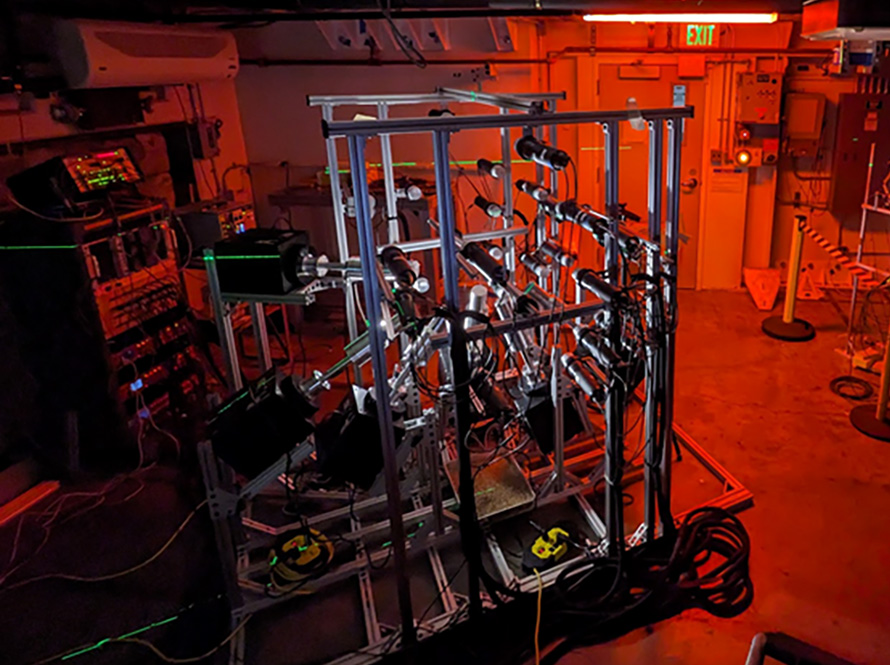
Developing fusion materials and diagnostics tools, including neutron sources for damage testing, 3D mapping systems, and ultrafast diagnostics to study material behavior and support fusion energy development.
Public-Private Partnerships
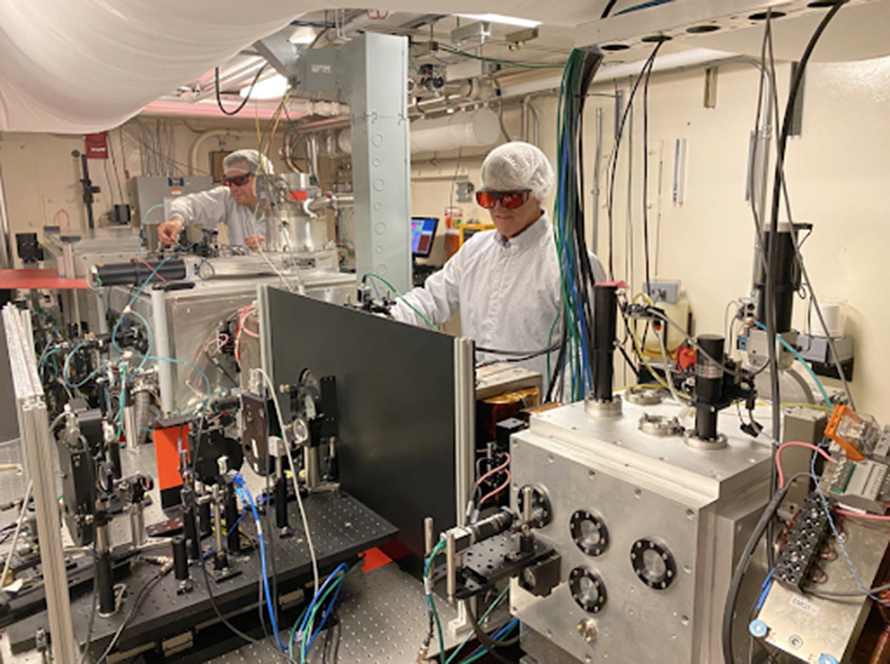
Partnering with public and private organizations to leverage shared facilities, expertise, and funding to accelerate the development, testing, and scaling of fusion energy technologies.

"High-temperature superconductors are enabling a new generation of high-field magnets that could make fusion systems more compact, efficient, and practical. Advancing these technologies is essential to realizing the promise of fusion energy."

"We’re making intelligent AI tools that speed up discoveries particle accelerators can make in key applications like fission and fusion energy, advanced materials, fundamental physics, and medicine."

"We can recreate and study the extreme radiation conditions fusion materials will face inside future reactors using the 88-inch cyclotron. That gives us a powerful way to understand how materials perform and evolve, helping advance more durable technologies for fusion energy."
From high-performance magnets to advanced simulations, Berkeley Lab scientists are developing essential technologies and insights to help unlock the potential of fusion energy.
Cameron Geddes, Director of the Accelerator Technology & Applied Physics (ATAP) Division at Berkeley Lab, discusses how the Lab is advancing next-generation science through particle accelerators, lasers, and photon sources. He explores how these technologies are pushing the frontiers of high-energy physics, enabling compact accelerator systems, and supporting breakthroughs in fusion and high-energy density science.
When It Comes to Fusion, Materials Matter
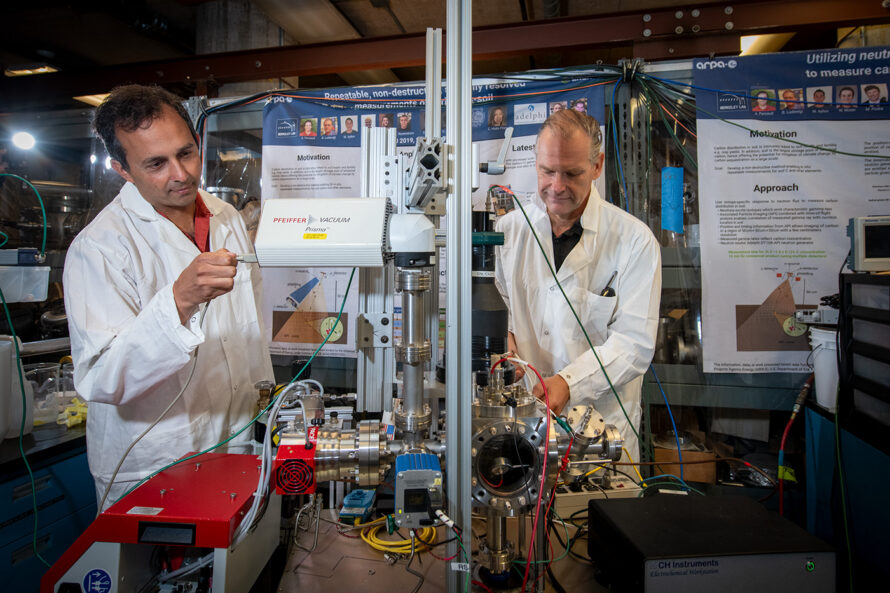
AI for Smarter, More Powerful, More Efficient Particle Accelerators
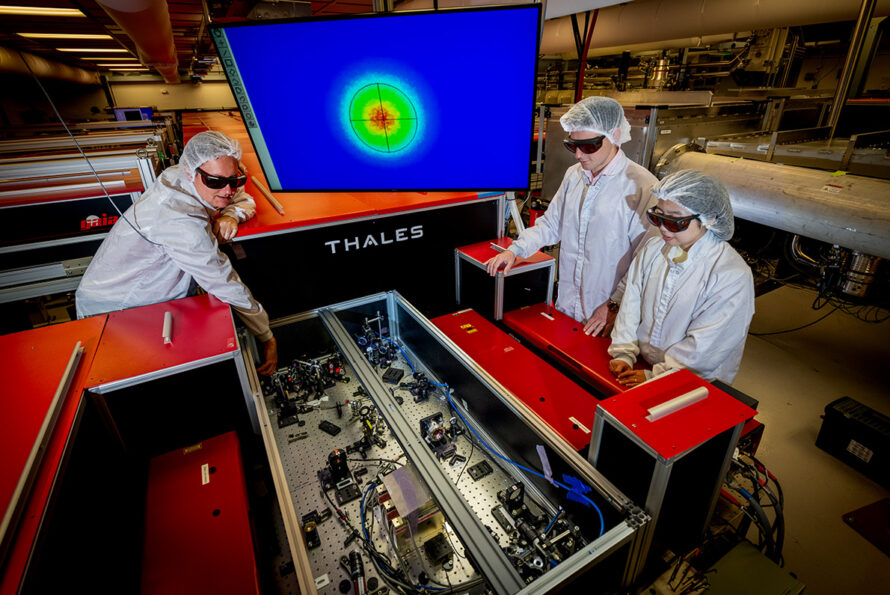
Leading the Field in Magnets
Materials and Chemical Science
Accelerator Technologies
Frontier Computing