
Building on decades of high performance computing (HPC) research, large datasets, and pioneering AI models, our contributions to the Genesis Mission center on delivering solutions that advance science and save lives. Learn more about the 13 Berkeley Lab-led Genesis Mission projects below.
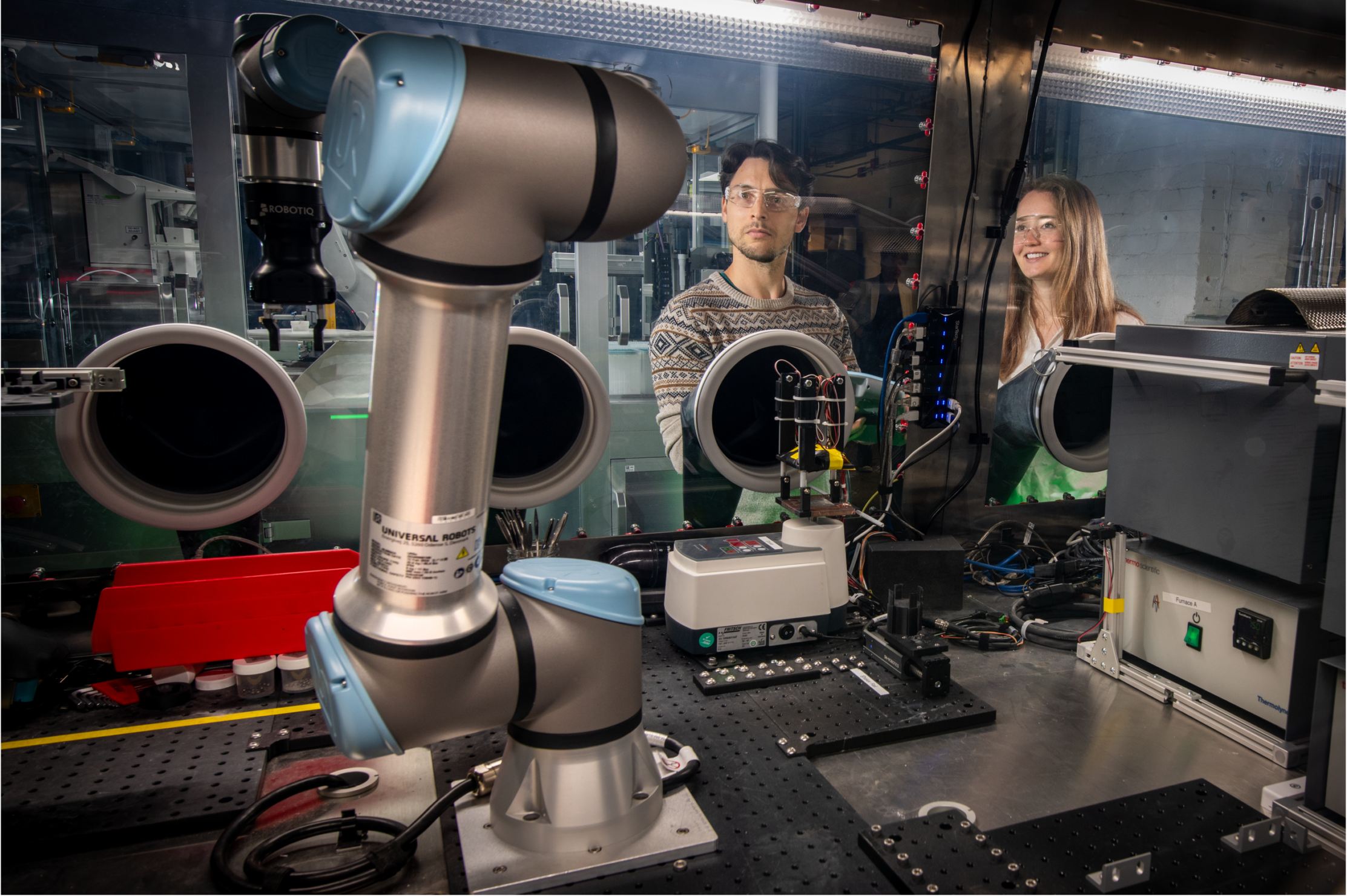
Researchers will create a team of specialized AI agents that combines scientific literature, simulations, and experimental data to propose, test, and refine materials hypotheses in Berkeley Lab’s robotic A-Lab. By learning from each experimental cycle, the system could accelerate scientific reasoning and discovery by 100-fold, helping identify advanced materials for energy, manufacturing, defense, and telecommunications.
Partners: Massachusetts Institute of Technology (pending final partnership agreements).
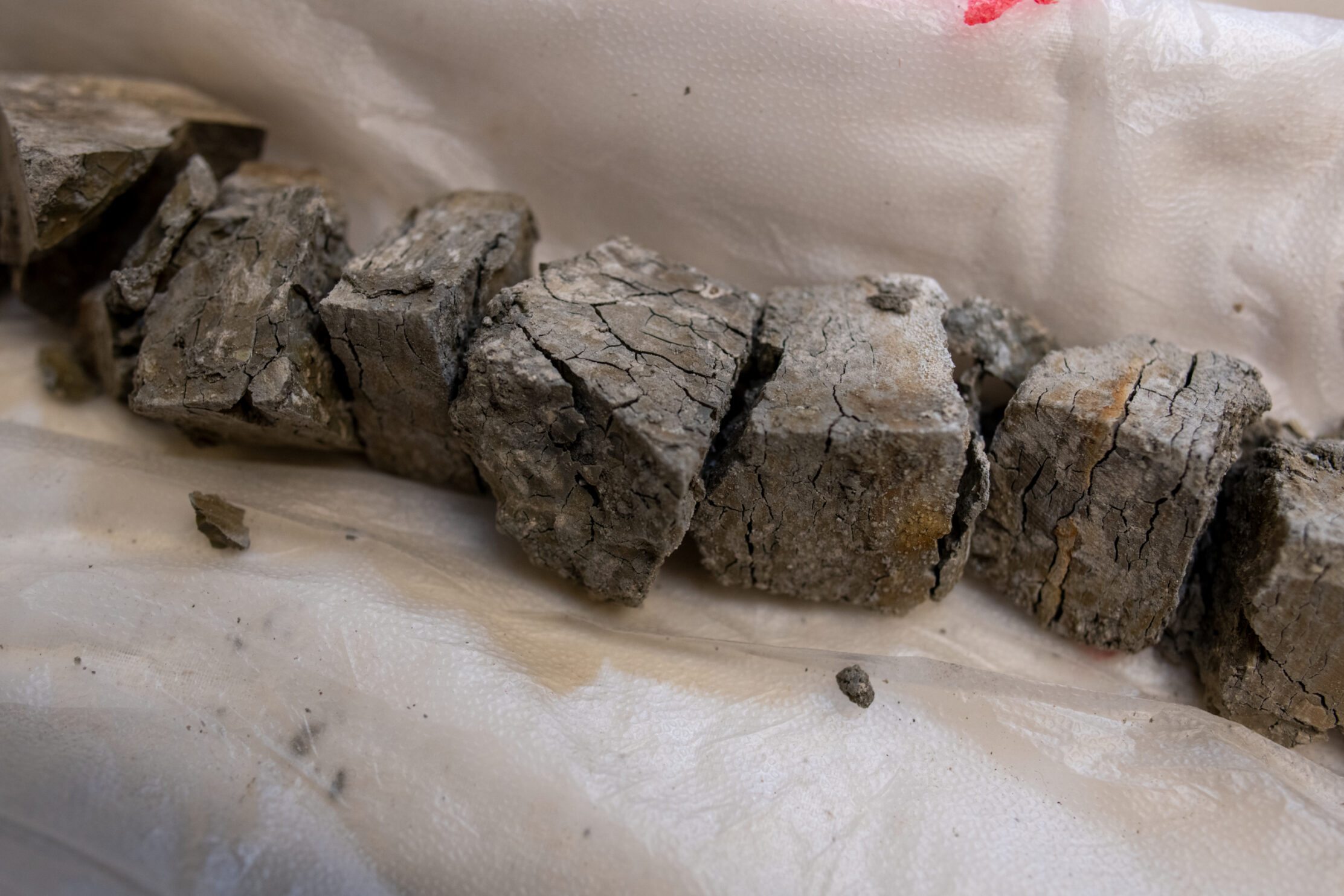
Because traditional mining is energy-intensive and creates significant waste, improved models could help determine how new critical mineral extraction methods can work at scale in the complex underground environment. This project combines AI with Berkeley Lab software for reactive transport modeling, which simulates fluid flow, solute transport, and chemical reactions. The framework will be applied at three mining sites to create a “digital twin” of mineral-rich geosystems that can help optimize mineral recovery.
Partners: Purdue University, Stanford University, Montana Tech, Group Ten (USA) Inc, Spruce Oregon Holdings Inc (pending final partnership agreements).

This project establishes an artificial intelligence-accelerated framework to optimize complex concentrated alloys for extreme environments. Tightly integrating three institutions, the workflow combines thermodynamic and kinetic modeling, rapid experimental synthesis, and atomic-scale structural characterization using advanced four-dimensional scanning transmission electron microscopy at the Molecular Foundry’s National Center for Electron Microscopy. This closed-loop system replaces slow, traditional trial-and-error discovery with a predictive, high-throughput materials design pipeline.
Partners: Lawrence Livermore National Laboratory, University of California Davis
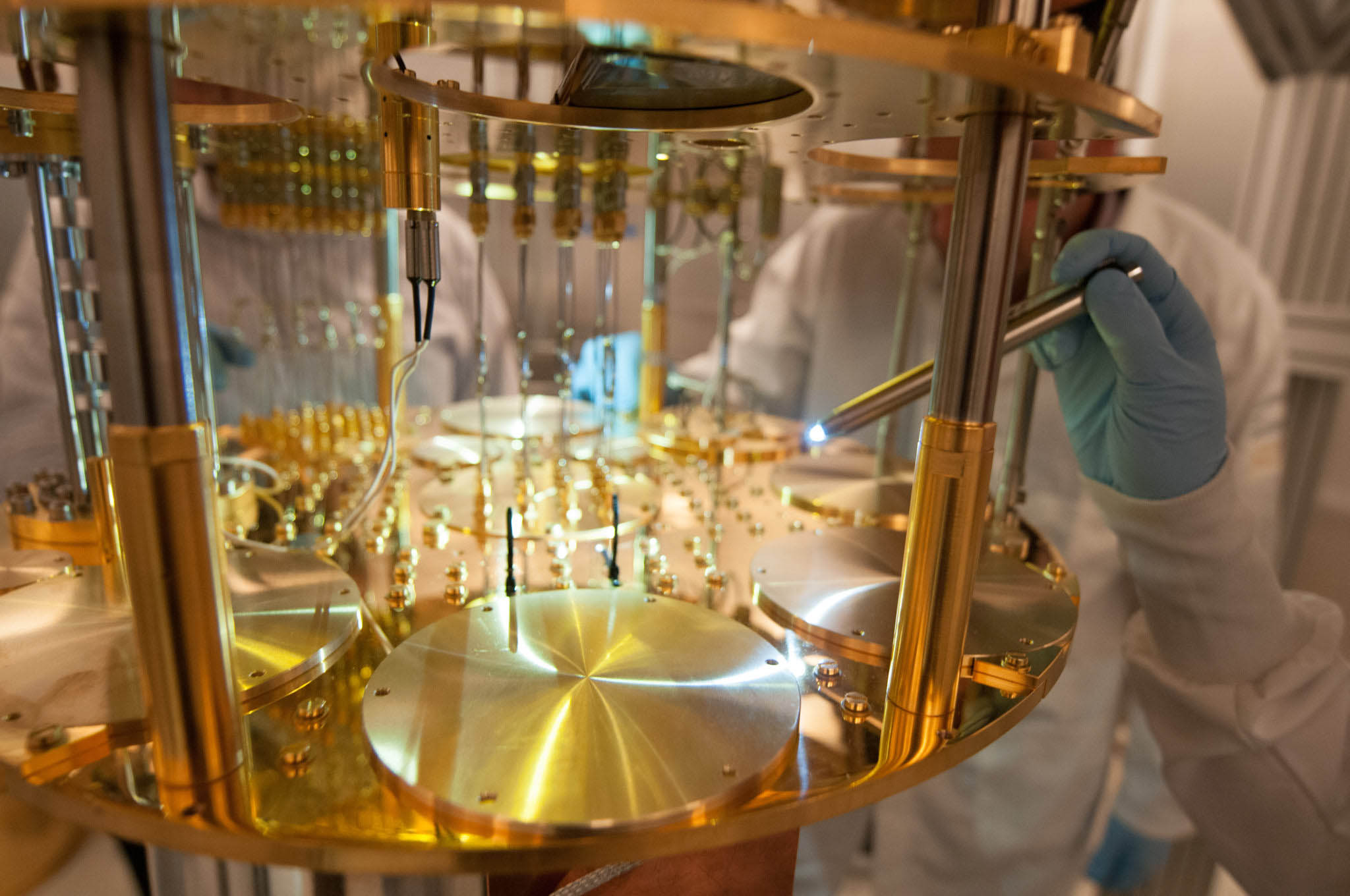
Many modern technologies depend on how materials behave when they are in excited states, e.g., after light absorption or charge injection. Predicting these behaviors requires physics simulations that are too computationally expensive to run across thousands of candidate materials. This Berkeley Lab-led project combines predictive quantum many-body simulations with advanced AI models to establish a framework that will accelerate the understanding and discovery of quantum and optoelectronic materials for future computing, sensing, and energy technologies.
Partners: Carnegie Mellon University, University of Southern California, Yale University (pending final partnership agreements).

Fractures in Earth’s subsurface control where fluids move underground, so understanding them is important for advancing subsurface energy applications such as geothermal energy. By combining seismic and electromagnetic observations from The Geysers geothermal field in California, this project will transform sparse observations into spatially continuous subsurface maps that reveal how fractures and fluid pathways exist deep underground, accelerating the often slow and meticulous process of characterizing and monitoring subsurface fluid flow.
Partners: University of California Berkeley, Google, Calpine (pending final partnership agreements).
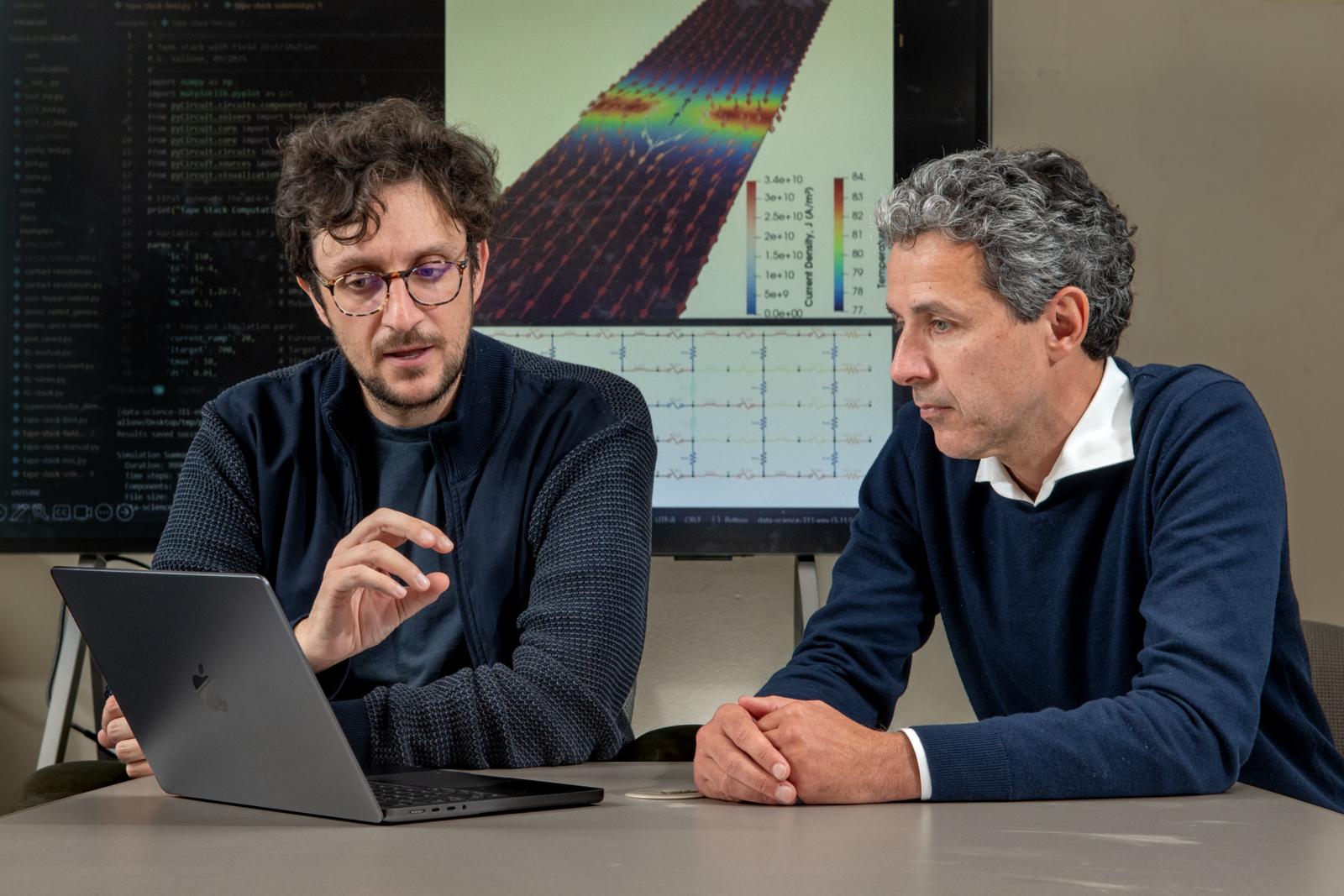
High-temperature superconductors are crucial for future compact magnetic fusion power plants, but their reliability is limited by difficulty in detecting defects and managing transitions to the normal conducting state (quenches). This can cause unexpected heating, potentially leading to catastrophic magnet failures. Using AI, we will combine models and measurements into a “digital twin” that assesses the risk of damage in real time and helps protect and control magnets for the next generation of fusion reactors.
Partners: Massachusetts Institute of Technology, Fermi National Laboratory, Florida State University (pending final partnership agreements).
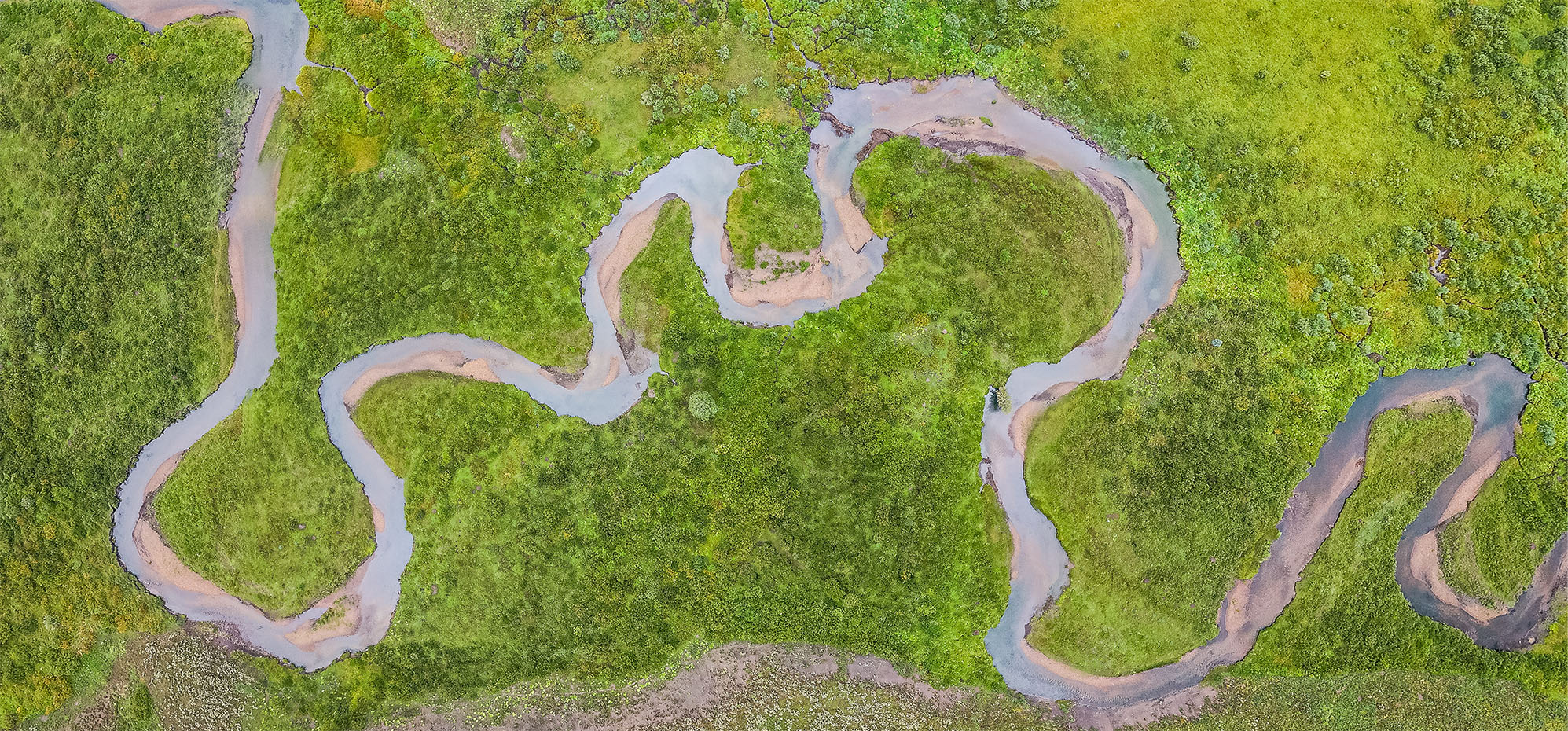
Water is essential to America’s energy grid, but predicting how much is available remains a major scientific challenge. This project will develop a first-of-its-kind artificial intelligence framework to jointly predict surface and groundwater with unprecedented detail and reliability in the Upper Colorado River Basin, eventually aiming to scale nationwide to help secure America’s energy and water future. Achieving this would fundamentally change how water availability is estimated for hydropower, fossil, thermoelectric, and geothermal energy production.
Partners: Los Alamos National Laboratory, National Laboratory of the Rockies, Massachusetts Institute of Technology, Google (pending final partnership agreements).

From the cooling needs of fossil and nuclear power plants to the expansion of water-intensive data centers, meeting the demand for uninterrupted water supplies is inseparable from and crucial for reliable energy generation and grid resilience. This new project creates an AI-framework designed to deliver accurate predictions of U.S. water availability and risks specifically for energy applications, providing water resource predictions essential for stakeholder decision-making and management.
Partners: University of California Berkeley, Sandia National Laboratory (pending final partnership agreements).

Linking precipitation to energy forecasting ensures consistent power generation and natural hazards preparedness. The ASPIRE project will build an AI system to accelerate scientific insights into forecast improvements using DOE’s flagship atmospheric datasets. By coordinating data curation, scientific study review, and regional atmospheric simulations, the project will compress scientific analysis from months to hours, demonstrating a novel research workflow focused on the microscopic and large-scale physics behind severe weather, and eventually enabling adaptive data collection.
Partners: Lawrence Livermore National Laboratory, Montana State University, Boise State University

American manufacturers leverage the Department of Energy’s scientific codes to address complex engineering challenges, but running them traditionally requires assistance from lab scientists. The Agentic HPC Pipeline Initiative will bridge this gap by developing AI workflows for commercial clouds to automate setup and analysis. These tools will empower U.S. companies to independently optimize semiconductors, synthetic fuels, and 3D printing, transforming lab software into self-service tools.
Partners: Lawrence Livermore National Laboratory, Oak Ridge National Laboratory, Rescale Inc. (pending final partnership agreements).
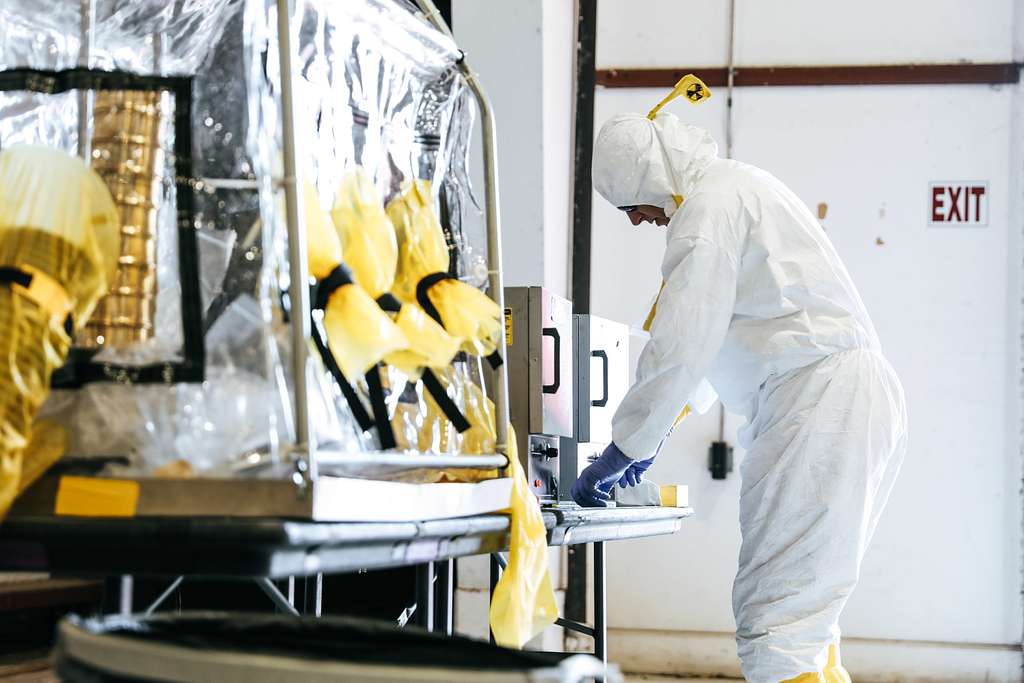
As decades of critical geological data is trapped in non-machine readable paper maps and PDFs, this project will develop an AI-assisted computer vision model to rapidly digitize these legacy records – helping identify safe sites for nuclear waste disposal. The extracted data will automatically generate 2D screening maps and subsurface models to quickly identify structural hazards, accelerating the development of safe nuclear waste disposal.
Partners: Deep Isolation Inc. (pending final partnership agreements).
The government holds millions of historical documents that could accelerate nuclear power innovation, but experts must painstakingly vet them for sensitive security details before release. To aid this effort, the HERALD project will build an AI-assisted pipeline to scan complex texts and engineering diagrams and link flagged content to specific security rules, enabling experts to quickly and effectively review documents. They will test this AI platform on published scientific papers before tackling secure government archives.
Partners: Valency Systems Inc.
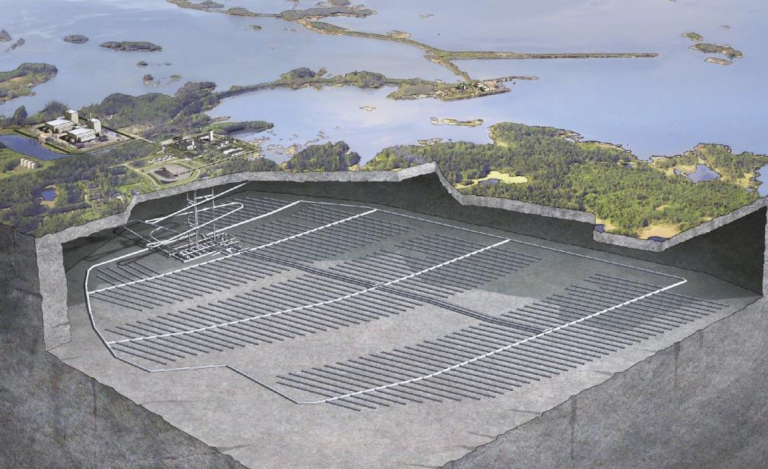
Safe geologic repositories for waste are essential to expanding adoption of nuclear energy, but their design analysis is a long, complex and inflexible process because many integrated factors are treated in isolation. This platform dissolves these silos, delivering a retrieval-augmented generation (RAG) framework centered on an AI-powered digital twin, linking waste inventory quantification, geological modeling, and performance simulation into one system, and accelerating repository design from years to weeks while keeping human experts involved.
Partners: Massachusetts Institute of Technology, Stanford University, Deep Isolation Inc. (pending final partnership agreements).
Berkeley Lab is an anticipated partner on 32 additional Genesis Mission projects led by other national labs, universities, and companies.
We partner with industry to help advance technologies for commercialization or deployment.
The Strategic Partnerships Office brings together interested collaborators and Lab researchers to foster strategic alliances that pave the way to science and technology discoveries.